Water accumulating on a basement floor can stem from a ruptured subterranean copper line, an overhead drain breach, or high hydrostatic pressure from Kearny's low-elevation water table. Accurate basement leak detection Kearny NJ services provide chemical, acoustic, and thermal diagnostics to identify the true origin before contractors tear down finished framing.
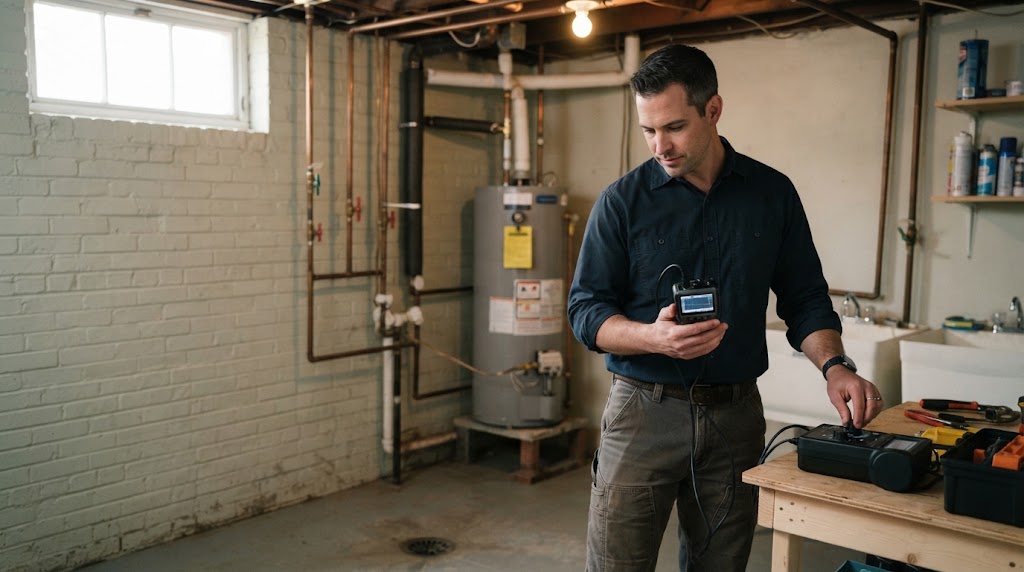
Plumbing Leak vs. Groundwater: The Critical Distinction
Homeowners in the Manor section and lower areas near the Passaic River basin frequently suffer from wet basement floors. However, treating a plumbing leak as a foundation waterproofing problem is an expensive mistake. Installing costly French drains will never solve a steady drip from a corroded hot water riser or a fractured main line.
We employ definitive diagnostic protocols to separate the two sources:
- Disinfectant Testing: Municipal domestic water from local utilities contains treated chlorine and fluoride. We chemically test standing water to immediately determine whether it originates from a pressurized potable supply or natural soil groundwater.
- Continuous vs. Intermittent Accumulation: Hydrostatic groundwater surges typically coincide with heavy regional rainstorms and high river tides. Plumbing leaks, on the other hand, flow continuously regardless of weather conditions.
- Acoustic Isolation: By placing acoustic sensors on main shut-off valves and basement risers, we listen for high-frequency hissing characteristic of continuous pipe pressure loss.
Uncertain Why Water is Pooling in Your Basement?
Do not guess between plumbing failures and exterior seepage. Speak with a local leak detection technician to evaluate your basement moisture.
Speak with a Technician: (201) 510-1615Finished Basement Vulnerabilities
In finished basements throughout the Arlington section, leaks frequently travel unseen behind perimeter furring strips, insulation, and drywall. Water can seep along the bottom plate of the wall for forty feet before emerging at the lowest floor drain or soaking costly carpet padding.
Common internal plumbing culprits in Kearny basements include:
- Water Heater Pressure Relief & Tank Welds: Aged storage water heaters corrode near base seams and temperature-pressure relief (TPR) discharge tubes.
- Overhead Waste Stacks & Cleanouts: Cast-iron drain stacks dating back to the 1920s develop hairline stress cracks along bell fittings, leaking wastewater during upper-floor shower use.
- Sump Discharge Line Fractures: If the exterior discharge line freezes or breaks near the foundation wall, pumped water recirculates directly through the foundation masonry.
- Floor Drain Backups & Trap Seal Failures: Obstructed subterranean lateral pipes causing back pressure during high household water usage.
Diagnostic Protocol: How We Locate Basement Water Sources
Our non-invasive investigation follows an editorial diagnostic flow:
| Investigation Phase | Diagnostic Tool | Action & Outcome |
|---|---|---|
| 1. Chemical Screen | Chlorine / Fluoride Reagent | Confirms municipal treated water versus untreated groundwater. |
| 2. Thermal Mapping | FLIR Infrared Sensor | Traces cold/warm moisture plumes behind drywall and under carpets. |
| 3. Acoustic Profiling | Digital Microphones | Isolates sound of pressurized pipe pinholes concealed in concrete. |
| 4. Pipe Camera Scan | Fiber-Optic Sewer Camera | Inspects floor drains and laterals for root intrusion or collapse. |
Surgical Access Instead of Whole-Room Demolition
By isolating the exact water origin, we prevent contractor demolition of entire basement wall systems. Once the leak coordinate is verified, a plumber can execute a localized opening to repair the pipe. For associated piping failures, review our pipe leak repair guide, or explore hidden water leak detection for upper-floor mysteries. Return to our overview of leak detection in Kearny to understand all diagnostic options.
Remember, any structural plumbing replacement requires a NJ licensed master plumber.
Frequently Asked Questions: Basement Leak Detection
How do you tell if basement water is groundwater seepage or a plumbing leak?
We perform chlorine and fluoride chemical testing on pooled water, measure water meter flow with all fixtures isolated, and conduct acoustic pressure tests on incoming domestic supply lines. Municipal tap water contains trace disinfectants and maintains continuous line pressure, whereas subterranean groundwater does not.
Can a hidden leak behind finished basement drywall cause floor efflorescence?
Yes. When a concealed pipe or water heater fitting drips behind stud framing, moisture pools on the concrete footing and migrates through the porous slab. As moisture evaporates, mineral salts crystallize on the surface as white powder known as efflorescence.
Do you evaluate sump pump discharge lines and floor drain backups?
Yes. We inspect both the mechanical functionality of check valves and the integrity of exterior discharge pipes to ensure pumped water is not recycling directly back through your foundation walls.
Stop Basement Water at the True Source
Call NJ Leak Detection in Kearny for immediate diagnostic clarification on basement leaks.
Call (201) 510-1615 Today